
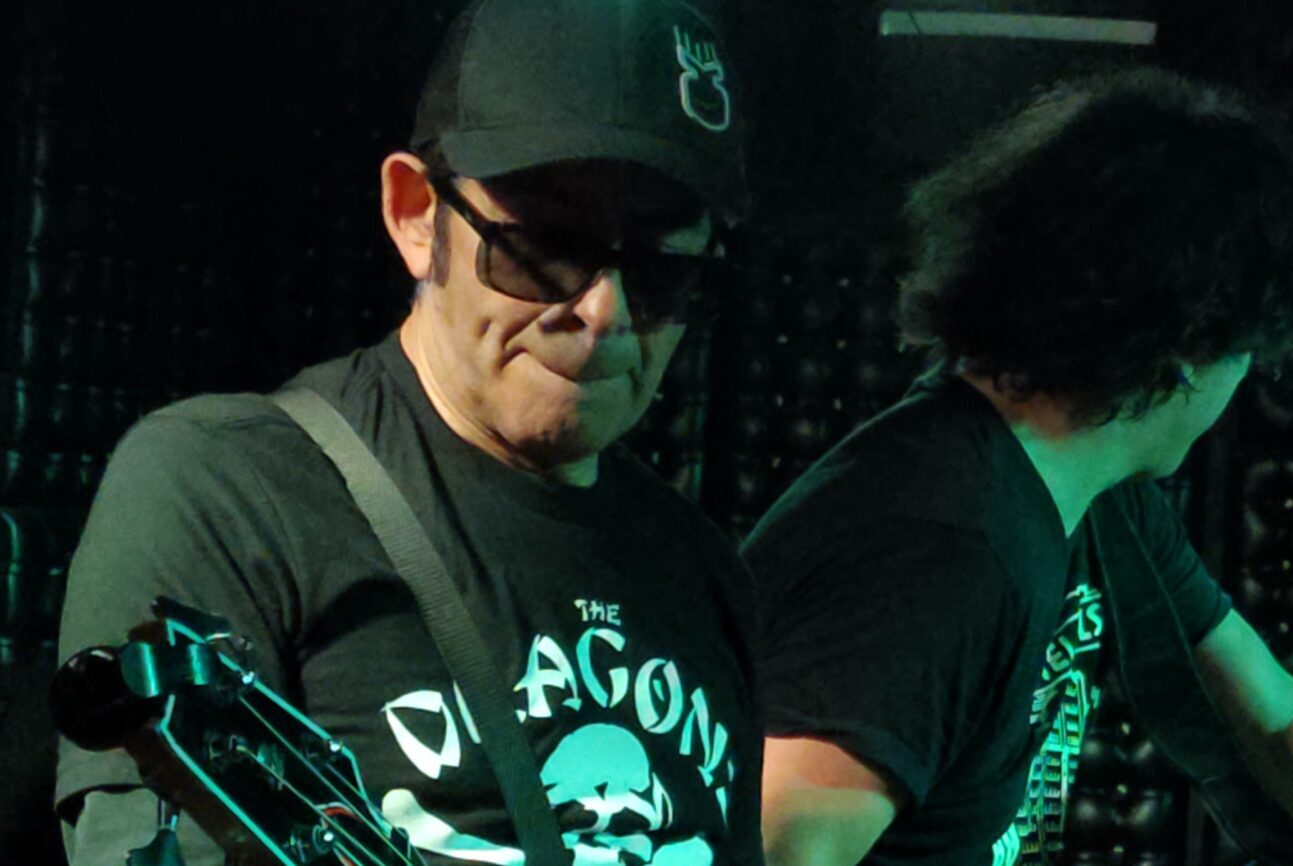
Hector Penalosa is mostly known for being the bassist of The Zeros, but he has also played/plays in numerous bands including the Avengers, the Dragons, F-Word, Baja Bugs, MCM And The Monster, Zeros 77, and has appeared on a ton of albums including the Zeros catalog, Flying Color, and others including several solo albums. He’s always telling me stories whenever I see him, so I decided to have him over to record some of them for history’s sake. After all, he’s been playing since he was a kid and has 6 decades worth of musical experiences to share! We talked for over 3 and a half hours, covering most of his whole career (there’s a lot to cover here!) and we probably could have talked for another 3 hours.
And this is part 6, the last and final part. In part 6, we talk about playing in the Avengers and how that all came to be, how his latest project the Hector Penalosa Gang started, how his most longest lasting project (the Baja Bugs, a Beatles cover band) came to be, opening for GG Allin, his solo albums, and then we come full circle with listening to KISS and practicing in Baba’s garage.
Audio in the youtube link. Transcript below that.
One thing we didn’t really cover is the Zeros 77 and how and why that came about. There’s Zeros 77 which is Robert Lopez and Hector, and then what is now The Zeros, which is Javier Escovedo and Baba Chenelle. I do have plans to interview Baba and Javier from the Zeros in the near future, so stay tuned!
Ted: So you spoke highly of the Avengers and then you end up playing bass for them. How did that happen?
Hector: Jimmy Wilsey, the original bass player, passed away on Christmas 2018. Jimmy was the second bass player they had in the early days. They had Jonathan Postel was the first bass player, who named the band the Avengers, but he wanted the band to musically go more towards a poppy kind of Flamin’ Groovie sort of sound, whereas Penelope and Greg and Danny wanted it to be a punk band. I mean they were into that. So they parted ways and then Jimmy had the balls to tell those guys one day, “I gotta be your bass player”… when he saw them at a gig playing. He was a shoo-in. He fell in there. They were really amazing. I used to, The Zeros played with them many times. I would go see them at the Mabuhay, 330 Grove, and whatever. They were just such a great package. They looked like they belonged together. Penelope was such an amazing front woman and beautiful, very striking, very powerful, you know, energy and Danny was just a monster drummer just pushing, pushing, pushing really well. And Greg and Jimmy, I mean, they just fit so good together. And they ended up opening up for the Sex Pistols with the Nuns on the bill.
Ted: That’s right. On the last show before they originally split.

Hector: Yeah. And the whole thing was that the the Avengers were going to open up, The Nuns were going to be in the middle and the Pistols were going to headline. Then the manager for the Pistols decided he want The Avengers to be in the middle. And I think the Nuns got really mad about that. But that’s how it went. The manager for the Pistols and Steve Jones really liked the Avengers to the point where they were talking management and then Steve Jones did produce three or four tracks for them. They’re on the Pink album recording. I always liked them best because they were just so great. And then in 2018, Jimmy passed away. And shortly after that in early 2019, I got a e-mail from Penelope says, “Hey, will you play some memorial gigs for Jimmy?” You know, play bass in the Avengers? I’m like, Jesus Christ, this is crazy! Because they’re my favorite band back then. I said “You know, I’ve been waiting 40 years for this. So let’s go!”
And so that’s how I ended up connecting with them. And then we played the Echo Plex. That was really great. And, you know, the Dils got back together where it was Chip with his stepson and his stepson’s friend. And they were really great. And there was a lot of other bands. And we did that gig. We did a gig in… I’m trying to remember… we did two gigs. I remember that. The first gig we did up in San Francisco, I think it was the Great American Music Hall. And then we did the one in Echo Plex. And then that was it, you know? And then like a month goes by and I get an e-mail from Penelope, “Do you want to go on tour for six weeks supporting Stiff Little Fingers?” I’m like, what the fuck? All right, I gotta make it work somehow. Let’s go! And yeah, we hit the road, man. It was amazing. We did so many gigs and it was all theaters and House of Blues. No small stuff. It was amazing. And that’s how I met the Sleeveen’s guy, Jamie! The bass player.
Ted: Oh, okay! (Hector Penalosa Gang just played with the Sleeveens at the Tower Bar a week earlier)
Hector: He was the roadie for Stiff Little Fingers. And some of those tours, Greg’s guitar amp blew out. And so Jamie just jumped in. He had no responsibility towards us, but he just went ahead and helped us out, out of respect. Yeah. And so I was like, man, this guy… and that happened a few times. I had a bass amp blow up and he did the same thing for me too. So yeah. We all made friends on that tour. And then I saw that he was coming out and he contacted me and said, Hey, I’ll be at the Tower Bar. It’s like come and hang out and see the band. And I’m like, see the band? I want to play with you guys! And luckily, Lety (Schizophonics) was booking it and squeezed us in there.

Ted: So how did Hector Penelosa Gang start?
Hector: Well, I’ve always had these little solo bands. And that’s one of a few. Some years back, I had a group called My Revenge, which was basically… we play a lot of the same songs we play now. But that was some coworkers of mine at Taylor. And then after that, I had Neco Neco Neco who is Nico on drums, Adrian on bass. And we would play like 30 minutes at the Riviera before the Baja Bugs (Hector’s Beatles cover band) would play the rest of the night. And that was fun. And after Neco Neco Neco, I didn’t really have any like solo band. Then my brother (Victor) introduced me to Alan, the guitar player, and Matt, the bass player. And Victor was the drummer in the beginning. But man, he’s all over the place. He’s got three, four bands that he plays with. So that became a scheduling problem. And finally, you know, when the Dragons no longer were playing, I was like, I always felt like Jarrod’s got to be the guy. He’s the guy for this band, you know? He’s a great drummer. I love that guy. He’s such a great person to hang out with. Easy going…

Ted: Great drummer too.
Hector: Yeah. I was like, Oh my God! I mean, that’s one of the reasons why I like playing with the Dragons so much: was him. I mean, don’t get me wrong, the songs are great, it’s fun, and I like playing with Mario and Kenny, but man, Jared is just so solid. It’s such a pleasure to have something like that, you know, to interact. Man, if I could get him in the HP Gang would be great.
Ted: Baja Bugs. I guess we should talk about that. You said that’s been going on for over 20 years. How did that start and why?
Hector: Well, the first thing I want to clarify: it was never a plan. It was an accident that lasted 20 years. (laughs)
Ted: It’s the longest thing you’ve been in, I guess.
Hector: Yeah. When I first moved back here from San Francisco, I didn’t really have a job, but I had some savings and I had a bunch of stuff. My brother was always like such a rock and roll fan of a lot of things. He would go to the Beatles conventions in LA, and he would buy bootleg VHS tape of Beatles concerts and interviews. Usually those situations were like the Beatles conventions at a hotel, and the guy selling the bootleg videos would rent a room, and he stocked all the dresser drawers full of videos. Then by word of mouth, would be like “go to room 236, this guy’s got the …” and then everyone goes up there, you know. And so my brother had this huge collection when I moved back down here. So I got this idea, I’m going to make Beatles bootleg videos and make my own covers and sell at Kobe’s Swapmeet or the Spring Valley swapmeet. I was doing that, you know, 10 bucks a pop, making a couple hundred bucks a day. It wasn’t too bad, you know. That’s before DVDs killed it. That was a whole other format. But anyway, so I’m at the Spring Valley swapmeet one day. And this kid comes walking by with a snack cart. He says, “oh you got Beatles videos. I want to buy some, but I get paid at the end of my shift. Are you going to be here like around 2:30?” I said, I’ll wait for you, you know, come back. I’ll wait for you. He comes back, buys some videos. I gave my number. Look, I got many more at home. You can always come over and pick and choose and I’ll dub them for you.
Ted: You did that because he was such a fan?
Hector: Yeah, he was a fan. And yeah, he’s seemed like a cool kid. And then we became friends because we had the Beatles interest. Then maybe almost a year went by, he goes, “Yeah, well, I’m making plans, you know, my girlfriend and I are going to get married and we want to have a Beatles band at the reception. And I’m going to hire this band from Hollywood.” They were called Moptops. They were very well known. And so the kid’s making money at the swapmeet selling snacks, you know? Pushing a cart. He can’t be rich, right? So then he calls me and goes, “Oh, I’m really bummed out. I can’t afford the band from LA. They want $4,000 to come down here for an hour”. And me with my big mouth, I said “Well look, what about if I get some people, some musicians together and we’ll play an hour’s worth of Beatles music for you for $400?”
He goes, okay, you know, let’s do it. So then I got my brother to play drums. I had my friend, Frank Barajas, who lived down here, now he lives in Ventura, but he got on rhythm guitar and vocals. And I got Xavier from The Hoods and the Trebles to play lead guitar. He plays with Andrew Rasmussen sometimes.
Ted: We ran into Jay from the Hoods in Melbourne.
Hector: Oh yeah, yeah! Jay, well he used to be roommates with Xavier and they played in the band.
Ted: Oh, ok.
Hector: So then I said to them, “Hey, guys want to do this thing? It’s only for like an hour and they’re going to pay us $100 each, $400 for the whole thing.” Yeah, yeah, let’s do it. So we started practicing. It wasn’t my intention to keep it going. I was just going to help my friend, and it was over. And we got together, we practiced a lot. And I remember during some of the rehearsals, Xavier started getting all weirded out and he’s like, “hey man, you know, I don’t know, man. I mean, I’m not really George Harrison.” Like guess what, I’m not fucking Paul McCartney. Let’s just get to work. (laughter) Don’t worry about it, man. It was funny. But, but yeah, we got everything tight. We went and did the wedding. He was happy. We were happy to help out. We got a little money and then I thought, okay, we’re done. Two weeks go by and I get the call from my friend who got married, Michael, he says, “There’s these people in the Poway High School District. They’re having a Poway high school beauty pageant that’s Beatles themed and they’re looking for a Beatles band.” And I’m like, Michael, I was just helping you out, you know, he goes, “No, no, no, they want to audition you. I already told told them about you.” I’m like, oh man, okay.
This is 1999. I had just been in San Diego for two years at that point. I said, okay, let me talk to the guys and see if they want to get together. And they say, yeah, let’s get together. So we got together, the people, the organizers came down, the hired us on the spot. Then we went into this beauty pageant. I have a VHS of it actually. Hilarious. And then next thing you know, somebody saw us there and they hired us for something else and they just kept going going and going…
Ted: … for 20 years.

Hector: Yeah. And I got to tell you, it’s crazy because not once did I have to hustle any gigs. I was always getting the phone calls. Which is a nice thing. I think a lot of it had to do because we really were extremely focused on delivering the music as it should be. We weren’t into the theatrics of calling each other Ringo or whatever and wearing wigs. We wanted the music to be the focus. Yeah, because any Beatles hardcore Beatles fans has heard those songs so many times. You can’t improvise. You can’t fuck around with that. You got to give them what they’re used to. And we kicked in a little extra rock and roll energy. And then in the beginning, we stayed away from all the hits. We were just doing all the B cuts and doing all like, you know, like the weird little songs that they would put out here and there. Because I knew that they would appreciate that too and go “I don’t have to hear ‘Twist And Shout’ for a million times again.”, you know what I mean? So that really worked to our favor. But then we get hired and people would say, Oh, can you guys play something… Can you guys play (this song)? Okay, we’ll learn it. We ended up with like three hours worth of Beatles songs. I mean, that was a lot of songs. We could play them all night. And we throw in Chuck Berry and you know, Little Richard songs that the Beatles used to cover from the rock and roll ’50s.
Ted: You’ve been in a lot of projects and bands, which we’ve talked about. Avengers, Zeroes, Riot Act, Wolverines, we didn’t even cover some of those, MCM & The Monster. What is and was your favorite experience being in a band?
Hector: I think just getting out and playing in front of people.
Ted: All of them.
Hector: Yeah. And you know, when when you when you when you play a full house, I mean, that’s just awesome, you know? It just happened last June with The Damned. I mean, five out of eight gigs were sold out before we even hit the road. We’re talking theaters. And that was pretty amazing. It’s a little intimidating sometimes, you know, but you just got to go for it and make sure you’re in tune.
Ted: Do you get intimidated after all you’ve been through?
Hector: Oh, well, you know, sometimes you kind of like, Oh, yeah, oh my God, I don’t know. But you got to stay in tune. Make sure your guitar, your bass are in tune and everything’s good to go, you got no technical problems. Be extremely well rehearsed. That’s the main thing because that gives you more confidence, when you know you’ve got your parts down. Even if you rehearse on your own, you know, once you get on stage, you’re like, okay, I’m not gonna fuck up.
Ted: Jello Biafra. When did you first meet him? What were your thoughts?
Hector: Dead Kennedys playing the Mabuhay way back in ’70s. Yeah, probably probably when we moved there. 1978, I think, because I think in ’77, the first couple of times, I don’t think there were a band yet. I think they were more of a band in ’78, early ’78 or somewhere in there. And, you know, it wasn’t really my thing. But I remember one time him and I, we had become a little bit of friends. We weren’t super friendly, but we would get out of there was a party going on at somebody’s apartment or something, and then everybody migrates to that place. I think there was one night when there was a party in South Mission, and I’m walking down on the street and there’s Jello walking to the party. So we just kind of met up and walked. And I remember I had these Beatle boots that used to belong to the drummer in the Flaming Groovies. And the Zeros opened up for the Flamin’ Groovies twice at the Temple Beautiful, where we played with The Clash.
Ted: And Victor ended up playing drums for them.
Hector: Yeah, many, many years later. Yeah. But, but the reason the Flamin’ Groovies played there was because they had lent their sound system to the Temple Beautiful so they could have concerts. And so we played with them twice. And then some months went by when I read and then we go to the Mabuhay to play. And the Flaming Grooves had played the Mabuhay the night before and the drummer left his drum kit, you know, he tore it down and put it away, but inside the bass drum, there was this pair of genuine Beatle boots that he had gotten in England when they were on England ’78 or ’77, whenever they went up there to record with Dave Edmunds. And Tony, the roadie, and I were over there unloading the equipment and Tony goes, “Oh man, look at those boots!” And I was like, “Man, don’t fucking steal them, dude. Leave them alone. I already know what you’re thinking.” And then that was it. I didn’t think anything of it. Whatever. And the next day, what’s he wearing? The boots! When I saw him, I said, dude, you fucking took those away. Oh man, come on. “Why they leave them there, man? You know, I’m going to wear them.” I said, Oh, Goddamn it.
Okay, whatever. And then some time went by and then I found these really nice, super pointy pattern leather shoes that were really nice. And Tony was just like all over those. Oh man, I really want those shoes. I really want those shoes, you know, and finally, “I’ll give you those Beatle boots.” I’m like, Oh man, I said, “Alright, I’ll take them.” I didn’t steal them, he stole them, but time’s gone by. So I ended up with the boots and they were really nice. They were genuine Beatle boots. And then years later, my friend Cecilia, who was a drummer in Frightwig, she really liked them a lot too. She used to say, Oh, those are really cool. And it was her birthday. I just gave them to her. “Here, you can have my boots.” I gave him to her for birthday.
Ted: That’s generous.
Hector: Yeah, you know, well she was my friend. Her and Bobby Castro. Bobby Castro was my best friend in San Francisco for many years. He was a photographer. He took pictures of everybody. He passed away in 2018 and he left behind 50,000 negatives. And it’s anybody and everybody you can think of. From the Rolling Stones at the Winterland in 1972, the Clash, Suzy Sue, Lemmy, you name it.
Ted: Who has those now?
Hector: His sister.
Ted: Okay, they’re not gone. Hopefully they’ll be shared sometime.
Hector: I told her a long time ago. Well, a few years after Bobby passed away, I said, actually, you got to do something with them. A coffee book, something.
Ted: It’s history! You got to preserve it!
Hector: Bobby had a really great eye for photography. He was the guy I always used for, you know, like Flying Color, for MCM & The Monster… I always had him do the photos, but yeah, he passed away in 2018. He had a heart attack in his house. Yeah. And Bobby and Cecilia were a couple at one point. And then the three of us were always hanging out together around that time. Probably ’82, ’83, ’84. And we were like the three musketeers. We were always meeting up for coffee, always hanging out together, always going to gigs together. And then I’d go hang out at Cecilia’s gigs, she’d go hang out at my gigs and Bobby would be there too.
Ted: Oh, you got to tell me GG Allin! You opened up for GG Allin! What band was that?
Hector: It was MCM & The Monster at the Covered Wagon. Howard Street in San Francisco. I want to say early ’88, somewhere in there, right after Flying Color broke up. Because we broke up late ’87, early ’88, somewhere in there.
Ted: So a rap band basically opened up for GG. How’d that go over?
Hector: Well, I mean…
Ted: Who was the headliner?
Hector: GG Allin, of course. Yeah, we got there early for soundcheck and then we were like hanging out and then we go to the bar after we do soundcheck. I think it was the soundman who was hanging out at the bar with us too, and then he goes, “Just for your information, you might not want to be standing in front of the stage when GG Allin comes on, because he usually takes a shit on stage and throws it at people.”
Ted: You’re like, what?
Hector: Like “holy shit. Oh, okay. Thanks for the warning.” And sure enough, man, we’d play, but there’s a lot of people. Then we’re like, okay, we’re done and we put away our guitars, you know, and then we’re like, let’s go to the bar. And we’re at the bar and everybody’s watching GG Allin and next thing you know, you hear the crowd just go, “OH! AUGH! EW!” Oh, okay, we know what he’s doing. We’ll just stay over here.
Ted: Did you meet him?
Hector: I didn’t talk to him.
Ted: But did you see him at soundcheck?
Hector: I saw him. Yeah, yeah. He was out there, we’re all hanging around.
Ted: Was he like normal or was he…
Hector: Uh, he looked a little… his crazy bald head and his weird mustache thingy, Fu Manchu thing. But no, I didn’t bug him or anything.
Ted: You weren’t starstruck. (laughter)
Hector: No, not really. I mean, he wasn’t… he didn’t become that legend that he was at that time. I think he was on his way.
Ted: He started off as like a pop punk type of thing.
Hector: I know. I know.
Ted: Some of the songs weren’t too bad.
Hector: Crazy scene.
Ted: So you didn’t even know who he was when you opened up for him.
Hector: Well, we heard of him, but you know, his notoriety and his insanity wasn’t like…
Ted: …full fledged.
Hector: Yeah… It only happened years later, I think maybe even after he died, people are like, Oh my God, he was crazy. “He did this and he did that.” I don’t know. Yeah. You know, it’s interesting to have those gigs.
Amy: Yeah, you did another solo album. “Music For Cats”. Who was on that?
Hector: Yeah. Yeah. It’s mostly me. It’s just me. The first one was the Hector album, which is technically the Flying Color’s second album. And then in ’96, we were in Madrid with the Zeros and this guy from Bambalam Records had flown in from Mallorca to go see the Zeros play. And he was a big Flying Color fan. That Flying Color album made a big impact on a lot of people. I think it ended up being number 73 in the best pop records of all time on Trouser Press years ago. And I was really surprised by that, but we did put a lot of work into it. And yeah, I was hanging out at this restaurant right next to the club that we’re playing after a sound check with the guys in the band. And this guy comes up to me goes, “Hey, my name is Manuel Blahblah. And I got this record label, Bambalam Records. And I really love Flying Color album, you know, I would love to put something out if you want to do like a solo album or something.” And I was like, what the hell? OK, let’s talk, you know.
So we kept in touch and eventually the “Music For Cats” came out. I had done most of those recordings at home on a four track cassette for a studio. But I was very, very, very like picky about the tracks and what I was doing. You can afford to like play things back and not be on the clock (at home) and not like a recording studio where you got to pay. “You know, you can go, OK, I can do that better or I can…” you know, and I’d bounce things around and stuff. And I had a lot of stuff already recorded for the CD too like ready to go.
And so I sent them all that, you know… Oh, no, I took it to Chris Von Schneider, who used to be in Flying Color after Richard Chase left, and Chris had a recording studio in the basement of his house. And at the time it was state of the art, because he had everything hooked up to the computer digitally, you know, but it was kind of like one of those Mac TV screen type computers. So him and I worked in there a lot and I overdubbed some vocals and maybe some cymbals here and there and stuff.

Hector: And that’s how we got “Music For Cats” done. And then I went out there September of ’96 to promote it. A tour for two weeks through Spain with that. And I took my brother, that was the first time he had been to Europe. I said, let’s go, you know, play rhythm guitar. At that time, I had a girlfriend in Barcelona and she played bass, so she was the bass player. And then she knew a guy was a drummer in Barcelona. So he became the drummer for that tour. And then we did the tour for two weeks. It was “Music For Cats” in 1996.
Then I didn’t really put out anything until Sioux Records, who offered to put out a solo record, which was “My Beautiful Tragedy”, which came out about three years ago. And Sioux records is owned by Ryan Mayers, who originally started Sioux guitars, which is like sort of a boutique guitar, electric guitars that are like always red with white pick guards and the amps were like red with white fronts. And then he said, “One day I’m going to make a record label.” I met him actually at a Dragon’s concert in LA when the Dragons played in Korea town. And I drove up there to do the gig. Mario already knew him. And then the guy, Ryan approached me backstage and goes, “Oh, man, I love the Zeros,” you know, and like told me whole story, whatever. Everything was cool. And I thought, man, this guy’s cool. Because he told me, “I almost I almost committed suicide being the only punk in my town, you know, and people harassed me a lot. And when I heard ‘Don’t Push Me Around’, I thought, ‘Yeah! Fuck this!. Yeah, don’t push me around.’” I was really touched by that story. Then we became friends. And then, anytime the Dragons would play, he’d fly out here. He was at the at the Casbah. He was at the Long Beach gig that we did back in May.
Ted: Was that the last show?
Hector: I think so… that was the last show. So right.
Amy: So far.
Hector: So far! Yeah. I mean, I kind of was hoping we would have been able to do the Michael Monroe stuff.
Ted: That would have been amazing. But Mario just started a new job.
Hector: Yeah, exactly. So he can’t just take off. But so yeah, you know, that’s how I met Ryan and we stayed friends. And then yeah, he offered to put out the record. So yeah, let’s do it, you know. That was cool. But yeah, I’m always recording and I always help people who are talented songwriters and singers that really don’t have an access to a recording equipment. In 2009, I helped this friend of mine, Regina Leonard. Man, that girl can sing! And she wrote these really cool country rock songs. She didn’t really have any money to go to the studio. And I had my 16 track digital at home. And I said, well, come over and we’ll knock out nine songs that she had. I think I spent like three months working on that with her.
Ted: You can get some really good sounding stuff in a living room.
Hector: Yeah, yeah, you can nowadays. You just got to know how to how to use the stuff and have a good ear. I keep in touch with some of them through Facebook, like Nicky Alexander, who used to be called, known as Nicky Beat, the drummer in the Weirdos. Yeah, he was amazing friend back in the day. Because when the Zeros started going out back in the day, it was always Zeros and the Weirdos, Zeros and the Weirdos, and maybe some other band. And so it just became this thing. I guess it was because there weren’t that many bands who were punk at the time, so it was a limited choice. And Nicky took us under his wing, you know. We were just kids. And Baba and I would always do soundcheck. The band would do soundcheck. They would do soundcheck. And then Nicky would go, “Let’s go get a hamburger.” You know, so we’d get in this car. It was this late fifties, like Oldsmobile. We get in that big old car and drive down to a hamburger place and eat with him and hang out. He just became, like I said, one time in some areas, you know, the Weirdo became like our uncles, you know, punk uncle. They were in their 20s, but for us, they were a lot older because we were teens, you know? But yeah, we were really close to the Weirdos. Those guys were basically, like I said, they were like family. They were like always were really nice to us. Nicky, in particular, was really cool. He lives in San Pedro. He’s originally from San Pedro. And, you know, we stay in touch on Facebook and stuff. But at one point he went from being the Bags’ drummer. Then he became the drum for LA Guns. For a while.
Ted: That’s a weird (transition).
Hector: Yeah. And I think that left a bad taste in his mouth. The whole music business. He just kind of like “Fuck everything.” And he disappeared for awhile. I didn’t know where he was until 2000. I think we went to Brendan Mullins house. He was having a barbecue where all these old punk bands showed up. Like Kathy Valentine from the Go-Gos was there and Jane was there. And then Nicky showed up! It was totally crazy. I hadn’t seen him in ages. And that was the last time I seen him.
Ted: It was like a big reunion.
Hector: Yeah, it was cool. But who else? Yeah. I mean, Geza, I’ve known Geza (X) forever.
(we start talking other things and then about drugs)
Hector: When I was at Chula Vista junior high. There was this really great teacher. This woman who was just like very factual, very straightforward. And she pretty much put the fear of God into everybody about drugs. And and and not that she was, you know, like, you know, tooting the horn or anything, but she showed us these films and she just kind of was very factual about everything. It really got me thinking, you know, and then we started going to L.A. to play and I was like people at that time, Quailudes were really popular and cocaine and all stuff. And believe me…
Ted: Did you get into drugs or anything?
Hector: Not at all. That’s what I was getting at. That teacher got to got the message across to me. I was like, no, it’s not the thing for me. And then when I discovered liquor. I was living in the Canterbury and there was a peppermint schnaps bottle, a couple of shots from that and was like, this is fun. You know, and then and then I remember maybe shortly after that, I was at the Whisky and I got really drunk on Budweiser and that was a mistake. And I was like sick the next day. And then I didn’t drink for a long time. And then when I reached reach 21, people take you to bars and stuff, so I got a little buzzed there. I remember New Year’s Eve, 1980, Baba and I were hanging out in San Francisco where we were like in this apartment, we were like. Just kind of like, what I’m going to do? You know, let’s go out and do something. Let’s go crash parties. So we just got out on the bus because, you know, I mean, you’re living right in the city. There’s all these apartment buildings everywhere. You’d see all these clusters of people walking, obviously going to a party. So we like latch onto the back end of these people and then walk into these apartments and grab a beer and then, you know, just hang out, like pretend like we’re part of the crowd. And next thing you know, like, oh, and who are you guys? We’re like, OK, let’s get out of here.
Ted: I’ve done that before.
Hector: That New Year’s Eve, we got really… Baba and I were so funny. But, you know, it didn’t become habitual. Like I got to the point where like it didn’t become that because I didn’t want to. When you’re a musician, you know, you got to think about, like in my case, I was like with the Monster and when I was 32 and we used to get all these people in the clubs and we used to get treated like royalty by the clubs because we brought them in tons of business, because they sold shitloads of tickets, they sold shitloads of booze. And they were like, what do you guys want in the back? We got Jagermeister, we got Cuervo, we got, you know, Heinekin whatever. They didn’t just give us drink tickets. They asked us what we wanted, you know, like, wow. And we’d have all this top shelf liquor. I remember one night at the Kennel Club, I was playing and I got really buzzed and I thought I was playing great and a friend of mine was videotaping. Oh, so like two days later, he’s like, I made you a copy of the concert. You want to check it out? Yeah. And I’m watching and I’m like, oh my God, I’m fucking everything up. That was an epiphany moment. I’m like, OK, what am I, a musician or a drunk? I got to make a choice here. I’m going to stick to the music and yeah, man, it was like a hard kick in the head.
Ted: So Victor is a huge KISS fan.
Hector: I know.
Ted: Did you turn him onto KISS?
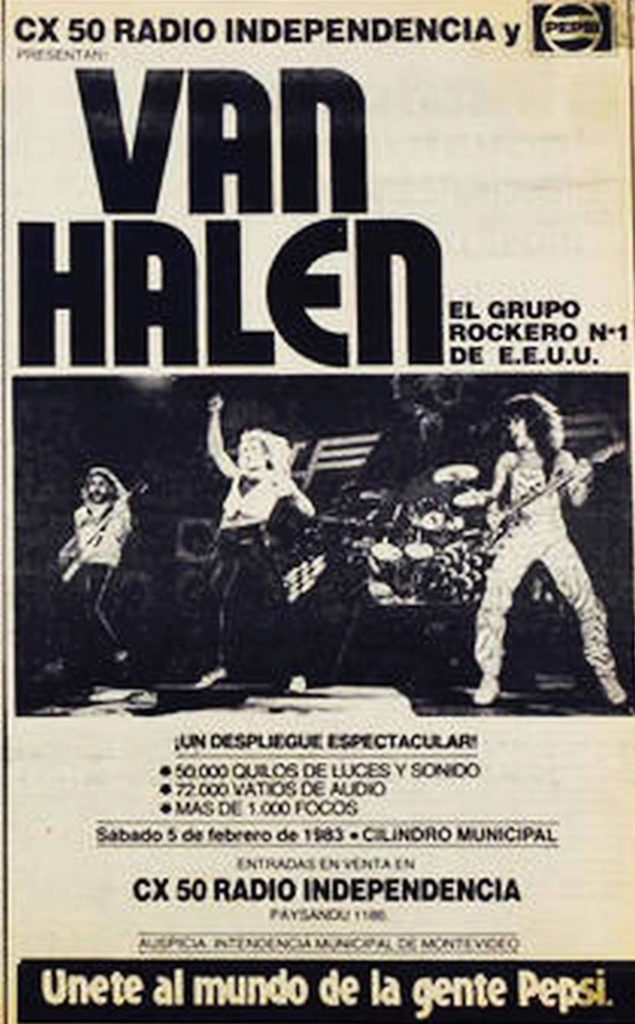
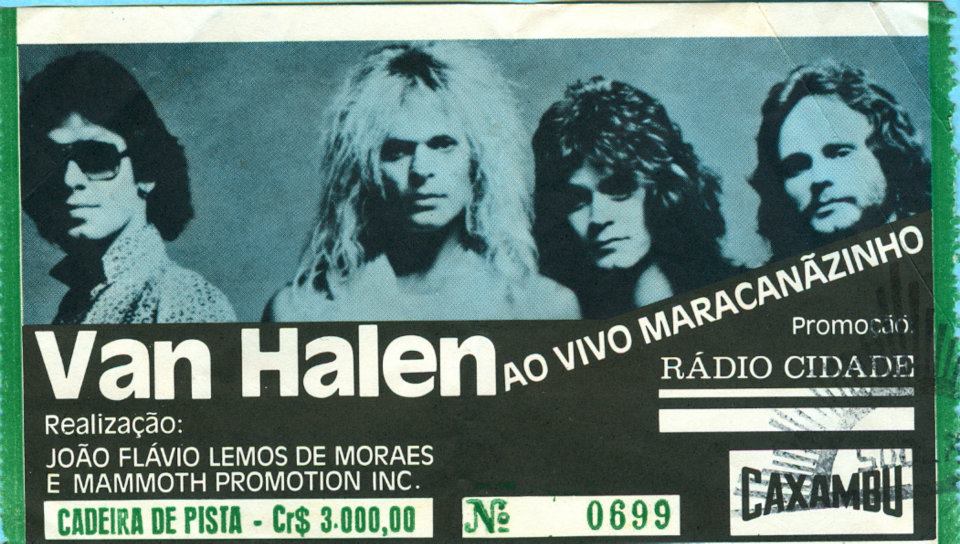
Hector: Yes. Oh, yes. Basically, Victor is 13 years younger than me. In 1975, when I met Baba at Chula Junior High, we just became new friends. Him and I. And the Midnight Special came on TV. And who’s on there? KISS. And I’m this 15 year old kid watching these guys. I’m going, what the hell is going on here? These guys got platform shoes, got leather with feathers and he’s got lipstick and make up is like, and I’m trying to make sense of this visual madness. So then the next school day, which was Monday, I meet Baba for recess and I said, “Hey, man, I saw this band. I can’t tell what’s going on. I don’t know if they’re gay or what. And they’re called KISS.” He goes, “Oh, yeah, they’re really cool. I really like them. I’ll bring over my records. You can borrow my KISS records. And he brought the three first KISS records.
That’s before KISS Alive! even came out. And so I listened them. I got totally in him and I became a fan, you know. Victor and I were sharing a room at that time. We lived on Broadway and H behind a shopping mall down there next to a Firestone tire shop. I had this big poster of KISS, a collage poster with everything. And of course every morning Victor would wake up. He’s maybe going on three years old. Wakes up to Gene Simmons spitting blood.
Ted: Awesome! You raised him right.
Hector: So, you know, he couldn’t say “KISS”. He used to call them Kukai because in Spanish, the word Kukui means it’s a slang word for the monster under the bed or, you know, something like that. So he used to mix them up and go “Kukai”. Yeah, he got into KISS later on, too. But that was my first major sports arena concert. It was KISS at the Sports Arena.
Ted: Oh, what year?
Hector: It had to be in early ’77.
Ted: So that was KISS Alive II.
Hector: Yeah.
Ted: They may have recorded some of that then.
Hector: I went with Baba, and Baba and I weren’t of driving age. We didn’t have any cars, but his older sister, Michelle drove us down there. And the three of us went to see the concert. And I believe it was Montrose, Heart and KISS.
Ted: Wow. I can look that up. I have the books.
Hector: Yeah. Yeah. It was some somewhere in ’77. I think it was like early ’77. But yeah, that was the first time I ever experienced loud music. Like, wow.
Ted: Yeah. Did that affect you in any way? Did it influence you?
Hector: Oh of course! The one song that Baba and I were learning our instruments to at the garage was “Strutter”.
Ted: Really?
Hector: Oh, we played it over and over and over. We’d do “Strutter”, “Pills” by the Dolls. And what was the other song…? Those two, we were always going back and forth, back and forth. I remember that. Yeah, the Bo Diddley song, but the Dolls version. And then “Strutter” by KISS. And then Baba’s dad would show up and he had a lazy boy in the garage and he’d sit down there with a cigar. “Hey, you guys play any Johnny Cash.” (laughs) It was so funny. But yeah, his parents were cool. They were very patient with us, because we were very noisy.

Leave a Reply