
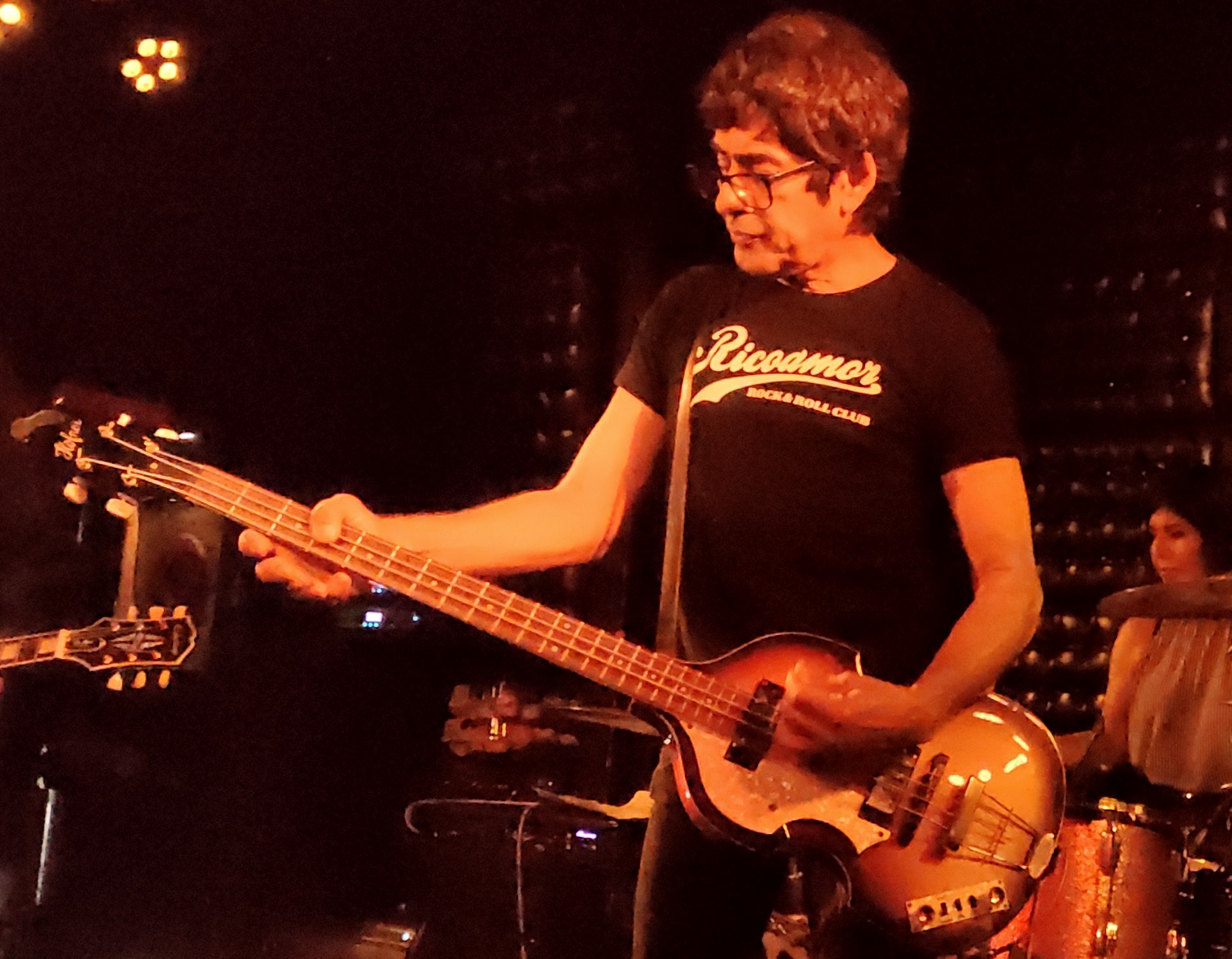
Hector Penalosa is mostly known for being the bassist of The Zeros, but he has also played/plays in numerous bands including the Avengers, the Dragons, F-Word, Baja Bugs, MCM And The Monster, Zeros 77, and has appeared on a ton of albums including the Zeros catalog, Flying Color, and others including several solo albums. He’s always telling me stories whenever I see him, so I decided to have him over to record some of them for history’s sake. After all, he’s been playing since he was a kid and has 6 decades worth of musical experiences to share! We talked for over 3 and a half hours, covering most of his whole career (there’s a lot to cover here!) and we probably could have talked for another 3 hours. I’m splitting this interview into 6 parts, each one being released for the next few Tuesdays.
In part 4, we talk about leaving Flying Color, MCM & The Monster (a rap/rock party band which resulted in gigs with the Beastie Boys, Ice T, Fishbone, Joan Jett, Melvins, Redd Kross, and more), the reformation of the Zeros in the ’90s (actually 1989), Bill Bartell (aka Pat Fear) getting them to Spain, and when he realized the Zeros were something special.
Part 1 is here
Part 2 is here
Part 3 is here
Audio is in the youTube link below, with the transcript and pictures below that.
Ted: So in ’87, Flying Color split.
Hector: Yeah, in ’87 we were preparing to do our second album, because Grifter wanted a second album. And the arrangement we had with Tom Allen was that we would give him demos, cassette demos of our songs, individually or collectively. Richard and I wrote a song together, we give him that. If I wrote a song by myself, I gave him that, and Dale and etc, etc. And then he would pick the songs for the record. On the first album, he picked three of mine only. And he picked, I think, five of Dale’s and three of Richard’s, even though I sang all the Richard songs, because he didn’t want to sing them. He goes “You sing them”, “I’ll sing them. No problem.” And then, and then on the second album, Tom wanted nine of my songs, one of Dale’s.
And then by then Richard was gone. We had Chris von Sneidern in the band, and one of Chris’s and Dale just lost it. I mean, he didn’t communicate honestly that he was unsatisfied. He just became very difficult to work with. You know, he just made it really hard to work with because he didn’t want to come across as an asshole, I guess.
And it just got really frustrating for me because, first of all, I didn’t make that decision. So don’t get mad at me or don’t complicate matters for the band, because I didn’t make that decision. And then finally, I thought, well, I don’t want to be in a band that’s going to be problematic like that. Let’s stick to the plan, we have to trust Tom’s decision and go with it. So that wasn’t happening. It was it was falling apart slowly. I even called Lisa Fancher at Frontier and I said, “Hey, I’m thinking of quitting the band because it’s happening”, you know, and she goes, “No, you kick him out.” I said, “I don’t kick people out of my bands.” I’m not going to kick out Dale. I think I’m just going to leave the band… “well, if you leave the band, there won’t be a second Flying Color album coming out on Frontier.” That’s what she told me. I said, Oh my God, you know, but I left the band anyways. And I never told those guys. They did get another bass player. They did try for a year. They did record with Tom again, but it wasn’t what it was before. And then nothing ever came of it.
I ended up jumping into MCM & The Monster, which was a band that I sort of started during the Flying Color era. And MCM & The Monster was this rap rock band that was… imagine AC/DC with one of the Beastie Boys. It was a live band. We had a scratcher. And we had Miles. Might Control Miles.

Ted: Was that just to try something different?
Hector: Um… I’ve always been very open minded about, you know, like not getting stuck in one genre of music. That’s why I’ve had these different projects. And Miles and I were roommates at Webster Street in San Francisco. And Miles was really into the Beastie Boys. And what was what was popular at time… Public Enemy, the very beginning of rap. Which was basically those bands.
And Miles was going to San Francisco State. He was learning English literature, he was studying English literature, modern poetry. And he was applying all the stuff to his lyrics on his raps. And so when Flying Color was still together, there was a club that we used to play called the VIS club. It was sort of like… it was on Fillmore Street. It was basically a club playing catering to the black neighborhood. I mean, it was something out of a Shaft movie, man. It was a crazy place in there. It had giant red pattern leather booths with these back giant backs and mirrors everywhere. And the bar was oval shaped and right in the middle of the space. It was really cool. And we used to play there. A lot of bands used to play there. And they were closing. And the woman that used to run it, Anita, said, “Hey, you know, I would love for Flying Color to do the going away party. And would you do it?” So yeah, of course, you know, we’ll do it. And then Miles, my roommate, was like, “Hey, you think I could get up there and do a couple of raps?” Yeah, man, it’s a party! You want to do that, let’s do it. And then my other roommate, Craig, wanted to get up and do like, “Pushin’ Too Hard” or something. So we just turned into big fest for everybody, you know.
And then Gary was another roommate, he was a guitar player, he wanted to get up there and play guitar. So we’re like, all right, this is going to turn into this talent show thing. Let’s just go for it. And so we planned it actually with Miles and Gary to get up at the same time. And Miles was like “Just start a beat!” So I just started to sort of jam on this, whatever. And we did and he started rapping and then people ate it up! Because it was rap was fresh, you know? Brand new. And we thought, Okay, it was fun and we’re done.
And that night, a guy that was in the crowd said, “Hey, I got this gig that I’m putting together at the community center in Hunter’s Point.” Now Hunter’s Point is South San Francisco heading towards the airport. You didn’t go to Hunter’s Point back in those days because there was a lot of drivebys down there. There was a lot of crack at the time. And so we’re like, Okay, we’ll go. (laughs) We weren’t supposed to go, but we’re going to go there and do the gig. And then that was the first gig that we did as official band. But at the time, it was Miles And The Ozone and I didn’t like that. I don’t know about that name. And finally, I was like, MCM… MCM.. and I was kicking around those m letters. And I finally realized, Oh, MCM & The Monster! That seems to work. You know, it became MCM & The Monster. Baba was the drummer, by the way.
Ted: Oh, really?
Hector: Yeah, because he was our roommate too. He lived in that house. So Baba was the drummer. I was the rhythm guitar player. Then we had Danny on bass, Gary on the guitar, DJ Pause on scratchers. And then Miles, the rapper/singer. And man, that thing took off like wildfire. Because rap was new. Everybody was excited about it.
And we had no records out. Nothing. It was just word of mouth. Baba used to work for this hippie mechanic who rebuilt Volkswagen transmissions. And he would get all these cars coming in for repairs.
And a lot of times people didn’t want to pay the money, or they just felt like it’s just not worth it. And Baba would end up getting like all these like goofy cars for a really low price. And one day he got this ’66 Buick Wildcat. A big old boat of car. Then he drove it over the house. And you know, we’re sitting there on the steps and he was like, “Yeah, man, we should do something with this car.” you know, for the Monster, you know, we should do something with the car. I said, Okay, I got it. So I wrote MCM & The Monster on side of the car with, you know, like the the munster letters with the bright green and yellow. You know, with the old monstery look. And then we chopped off the top. We reupholstered, recarpeted with thick, shagged lime green carpet. (laughs) Oh my God, we were crazy, man. I took off the front grill and I made these giant fangs and teeth out of like plastic. And that thing became the best advertising tool we ever had without realizing that that that’s what we were doing. We just wanted to have a goofy car for the band, you know, like the Monkee Mobile, kind of like that. People would come to the shows and go, “Oh, we came because we saw the car driving down the street. We’re just wondering with the name in the paper and wanted to see what it’s about. Yeah, so that worked out. But but with the Monster, we opened up for the Beastie Boys and Cypress Hill. We opened up for Body Count. And opened up for Ice T on his first ever record release at the I-Beam. Yeah, we opened up for a lot of bands.

Ted: What do you remember about Ice T?
Hector: He was nice, you know. I remember..
Ted: He is a thrash metal fan. He did some stuff with Slayer.
Hector: Oh, did he? Yeah, I think so. But yeah, we were playing at the I-Beam and we we knew about him. His first record on Sire was barely coming out. And then you know, we met him a sound check and told him we liked his record and he was really nice, you know, he was cool about about playing with us. “I’m looking forward to seeing your band.”
Ted: because of the car.
Hector: Yeah, we used to take all our equipment in the back of that car. We’d just pile… We took the backseat out and we just had the front bench… my God, it was a mess. (laughs) There’s actually video if you look in YouTube, there’s an MCM & The Monster video with the car.
Ted: What about the Beastie Boys?

Hector: Beastie Boys. That was actually practically our last gig as a band in the late ’80s, 1988, it was. and they were playing at the I-Beam again. There was a lot of gigs at the I-Beam that we used to play because it was a really popular spot. Cyprus Hill was opening, we were in the middle. Nobody knew who Cyprus Hill was at the time. And then the Beastie Boys had a line in and you know, they had their own dressing room and stuff. So I didn’t I didn’t really go bug them. But they were great. I mean, watched them live. And I was like, wow! And we got to play with them! It was crazy.
But yeah, we also played with the Untouchables with Fishbone. We played a lot of great gigs, man. Oh, the biggest one that we did was, we opened up then Joan Jett. Then Primus. At the Warfield.
Ted: Oh, wow!
Hector: Yeah, that was a crazy bill.
Ted: Did you get a chance to talk to Joan Jett and say “Hey I saw the Runaways back in the day!”
Hector: Yeah, actually, when we ended up taking a picture together! I think Miles probably has a copy of it, because back then we didn’t have cameras, you know, we didn’t have phones, we had little cameras. And Miles had a camera. He said, Oh, let’s take a picture with Joan Jett. I don’t have a copy, though, but it’s floating around somewhere!
Ted: Maybe I’ll find it for the interview.
Hector: Yeah. But yeah, that was fun.
Ted: So when did you get back into The Zeros? ’91?

Hector: In October 89, I moved to LA for a couple of years since I subletted my room on the house I lived in, in San Francisco. I left because MCM & The Monster had been approached by Epic records and Slash records and a few other major labels. And I was like, “Guys, let’s let’s do this.” But for some reason, some people in the band… do the math… realized that it was a good thing. And it all came down to management. Because we had no manager, and we were getting all these amazing gigs just by word of mouth. And our performance. I mean, we were like a really fun band. I mean, it was a big party every time. Miles knew how to like have fun with the crowd and make it really fun for everybody. And so we got approached by Chris Coyle, who was a business music manager. And at the time he had gotten the Sea Hags. A record deal with Chrysalis and got them on a Friday the 13th soundtrack. Then he had gotten Jellyfish or Green Jello or somebody like that, a record deal. So the guy had a good resume. And he came to us and said, “I want to do business with you guys. Let me manage you.” And I thought this would be great. He because that’s all he did seven days a week. He wasn’t wearing all these hats. That was just his thing. And he had connections. But we used to have this woman, Linda Champagne, who was our sort of like unofficial helper, wasn’t exactly a manager, but she took care of bookings and what have you. And she felt threatened by that and said, “Oh, I don’t know. Chris Coyle, he’s a coke addict…” Because he had a lawyer and “the lawyer’s a coke addict.” I was like, “Well, what else is new Linda?” (laughs) What the fuck?
So and we told her, look, whatever happens, you’re coming along, you’re going to be like a band member, you know. Don’t feel that way. But it turns out that her and Baba had been doing other than just business behind closed doors. And that wasn’t a good thing. Because but you know, it just wasn’t helping. And we’re like, What is the hell man? Anyway, so we didn’t go with Chris Coyle. I was really pissed. And I thought, man, this is a dumb thing. This is like shooting fish in a barrel man. Come on. And then and then Bob Biggs from Slash records wanted to do a record with us. And he flew up LA and rented a really nice conference room at some fancy hotel and we met him there. And he said, Yeah, you know, I’ll drop 50 grand on the first record, you know.
And we’re like, we should do this. And again, for whatever reason, you know, somebody took the… it was weird. I can’t believe it. And then we had Tony Isabella, who was working for Bill Graham at the time. And she came to us too and goes, “I would be interested in working with you guys.” So we go to Bill Graham’s offices to have a meeting with her at the conference room. We’re sitting there and fucking Bill Graham walks in. I think she was doing it on his behalf, even though she wasn’t saying that. Because he walks in all like, “oh, I’m looking for this paper.” But I’m like, no, man, you’re checking us out, motherfucker. But anyway, so… and then that didn’t go through. And then we ended up with this guy, Brian Raffi, who was the last guy I would have ever gone with. He was half owner of a club called the DNA. He was a DJ. But he didn’t have that type of resume, you know. Like Bill Graham, Tony Savella, or Chris Coyle. And we ended up with this guy. And I knew. I said, “This isn’t going anywhere.” I can just tell. And then Miles got frustrated. And he’s like, “Oh, I’m going to just do the last gigs that we have on the calendar.” I think we played, opened up for the Dead Milkmen at the Filmore. That was our last show. And then I was like, well, if he’s leaving, I’m going to leave. Because it was like the Rolling Stones. You can’t replace Mick Jagger, no matter what. That’s what Miles was to the band. He was the guy. If he left, fuck it. It’s not going to work. And when he left, I said, I’m leaving too. I’m out of here. And then I moved to LA out of frustration. And I lived there for a couple of years. And then that’s when Robert…
Ted: Javier was there.
Hector: Yeah. And Robert had just started El Vez. It was his first gig. I was the guy running the cassette deck for him.
Ted: Oh, really?
Hector: Yeah. Because he had, well, he’d been up in San Francisco like a year or two before, told me that he had this idea to do this Mexican Elvis thing. I thought, oh, it sounds kind of crazy, but whatever. And then, and then once I’m down there and he’s got it all together. And he goes, “Yeah, I’m going to play at this club downtown LA. And would you would you would you run the cassette deck for me?” Because he had all the, you know, kareoke style. He had all the background music on cassette. And he had the two El Vettes, you know. And I say, yeah, I’ll take care of it, man. I’m running the cassette deck and he’s doing his thing. And then after that was over, I’m like, “He needs a live band.” I’m like, he’s got to have a live band. So I said, dude, you got to get a live band. And he was like “Well, help me put one together.” So then we started, you know, asking people around. We asked Baba, he was living in LA.
Ted: Did you play?
Hector: I ended up being the guitar player. In the beginning. Yeah. And so we got some musicians and we started having a live band, you know. And I was in El Vez, the first incarnation, for almost a year. We played all over the place.
Ted: And Baba was on drums?
Hector: He didn’t want to do it. We asked him and he said he didn’t want to do it.
Ted: It’s half The Zeros.
Hector: Yeah, right. It was crazy. And then I ended up moving back to San Francisco after a couple of years. And then the Monster got back together again. And we did like three years, two or three years of playing around. But we were way past our opportunities to, you know, get anything.
Ted: Was MCM & The Monster the most successful thing you into up until that time?
Hector: Locally, yes. You know, we had no records out. We had nothing out and we would pull in five, six hundred people at a time. And we’d end up opening for these really great bands. With nothing to show, except live performances and a crazy car. So imagine if we had put out some records! There are recordings out there because we did go into studio and did some recordings, but they came out way later. There’s three CDs out. Because basically what happened when we got back together with The Zeros in 1990, when Bomp decided to put out all those all the recordings, Javier called me up. I was still living in LA, but before I moved to San Francisco. He said, “Hey, man, Bomp wants to put this record out, and Zeros… You want to, you know, get the band back together so we can promote it?” And I said, Yeah, let’s do it. You know, so that’s when we got back together and we played the Kennel Club in San Francisco. We played Club Lingerie in LA. We played, I think down here in San Diego. I can’t remember where, but like somewhere down here.

Ted: How much did the Muffs covering “Beat Your Heart Out” do for you guys?
Hector: Well, a lot of exposure. Yeah, a lot of exposure, man. Last year when we did the Zeros 77 up in Sacramento, Ronnie Barnett, the bass player in the Muffs, he recently moved up there. And, you know, he’s a friend of mine and stuff. So thinking ahead, I thought I’m going to get him to play bass on “Beat Your Heart Out”. So I sent him a message saying “Hey, man, bring your bass to the gig because you’re going to play Beat Your Heart Out.” He was like, “I haven’t played in a long time, but OK, I’ll do it!” I thought that’ll be like really cool. And so, yeah, he showed up and it was time to do the song and I said “Well, go for it, man!” I just ran ran off stage and let him do it. It was really fun. It was really cool. Because yeah, why not? I mean, they played that song a lot back in their day.
Ted: You know, so Bomp put out a full length album, The Zeros. And then there was another album out that was like demos.
Hector: No… And then during that moment where we were promoting that album, we played at the Palace in Hollywood. And that gig came about because Robert, as El Vez, was going to play that gig along with the Go-Gos and I think the Alley Cats and all these bands from the punk scene. They were playing to raise funds to pay off medical bills for Craig Lee, who used to be the guitar player in the Bags, but then he became a music writer for the LA Weekly. He passed away of AIDS, but he had medical bills. So this concert was getting organized. And then Robert said, “Hey, if The Zeros want to play, they’ll give us a spot.” So we’re like, Yeah, let’s do it. So we went up there. We played that night. It was right across the street from the Capitol Records building on Vine, I think. And then we’re walking across the street to get to our cars, which were parked at the Capitol Records building parking lot. And here comes… that White Flag guy…
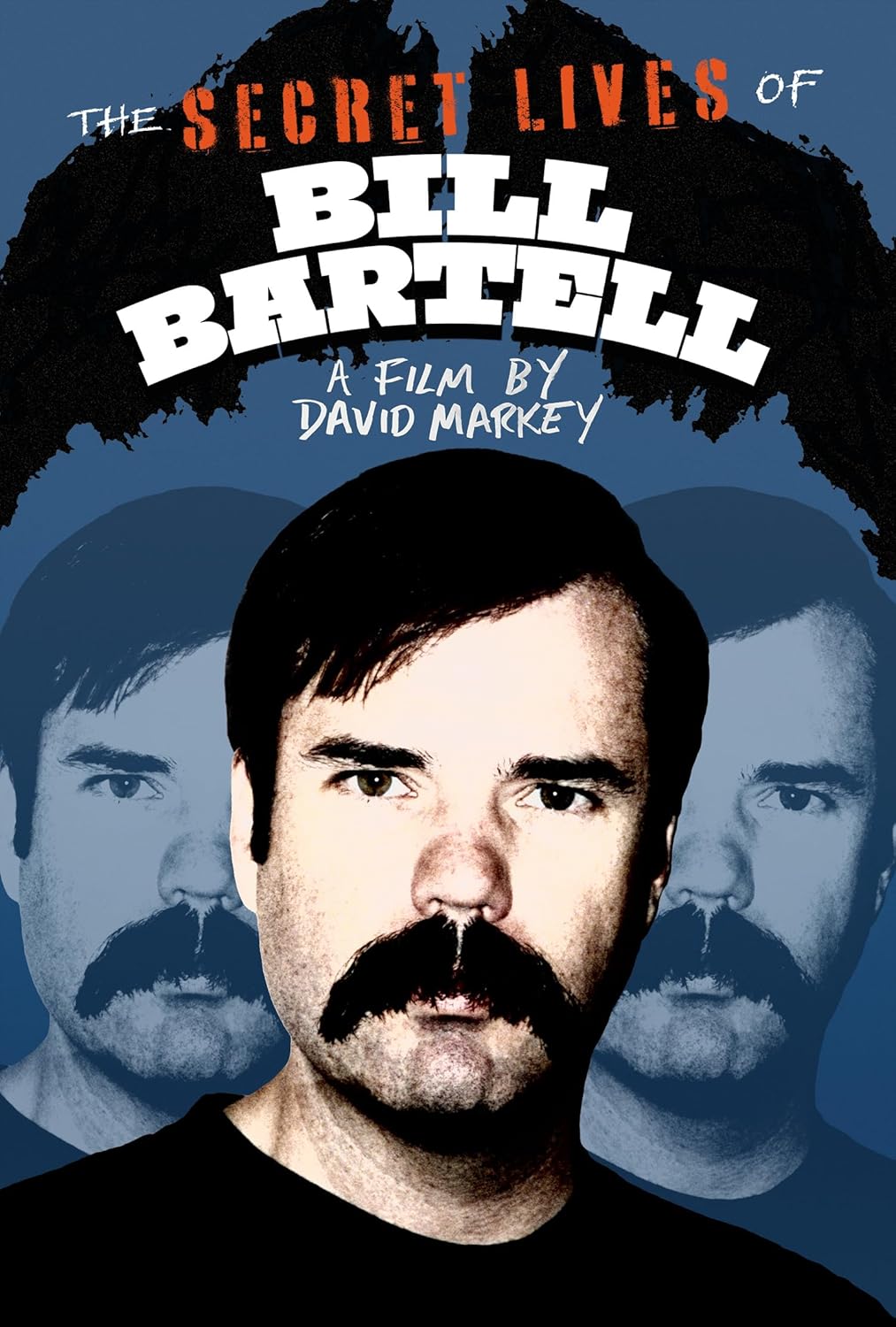
Ted: Pat Fear.
Hector: Yeah, his yeah, that’s his stage name. Because Pat Fear…
Ted: Bill Bartell.
Hector: Yeah, Bill Bartell. Thank you. And he says, “Guys, guys, guys, I got to talk to you! You want to put out a 45? I’ll put out a 45 for you!” And we’re like, what? OK, you know, he gave us his card. Alright. And then we’re like, OK, let’s do this, you know? And then Robert says, “Hey, well, the guy from Sympathy For The Record Industry wants to put out some Zeros singles.” So I’m all like, well, let’s go in the studio and we’ll knock off both singles at the same time. So that’s what we did.
We went to Richard Blitz here in San Diego and recorded four songs and gave two to Bill Bartel and two to Sympathy. And that’s how those singles came out. And then Bill was real excited. And my whole intention with Bill was like, I want him to actually want us to put out an album. So if we make this record really great, you know, we probably want to make a whole LP and sure enough, “Let’s make an LP.” So then we started recording the Knockin’ Me Dead album. And then we had people like, I think the McDonald Brothers (Redd Kross) came in and sang some backgrounds on the song. And we had Chip and Tony, come in and do some stuff. And yeah, it was really fun recording sessions. And then Bill put it out on CD.
And he goes, “Oh, by the way, get ready because you guys are probably going to go to Spain because I’m going to license the master to Munster records.” And I’ve never even been to Europe, so I’m like OK, that sounds like fun. Who’s going to show up at our gigs? I honestly thought. (laughs) 1995, you know, and sure enough, we were booked. We had a tour of Spain for like two weeks, and Sweden for one week.

Ted: How’d it go?
Hector: Amazing. I honestly thought “Well, I’m getting a free plane ticket and, you know, I’ve never been to Europe, so I’ll go see what it’s about.” I really thought we’re going to go play for the bartender and the door guy and the sound man, you know, everywhere we go. No one’s going to know about The Zeros in Spain.
And it was exactly the opposite. Everywhere we went, it was just jam packed with people. Big fans. I mean, the first place we played was a Zeppelin Club in Valencia. And we did the gigs, totally sold out. We’re hanging out in the dressing room right next to the stage. And these people are walking in not just with Zeros records, but with True Believers records, with Hector solo albums, with the Flying Color, with Robert/El Vez and was like “What the hell? These people are hardcore!” That was an eye-opener, man. And yeah, that was a really great tour. And then we flew from Madrid to Sweden and we played with a band called Sator.
Ted: Oh, yeah, yeah. They covered “Black And White”
Hector: Yeah, yeah. On the “Barbeque Killers” album.
Ted: They do an amazing version of it.
Hector: Yeah, they were really big fans of the California punk scene back from back in the day. And so they were excited to have us on the tour. These guys were on Warner Brothers Europe. I mean, they were rock stars in Sweden. So we were playing three thousand, four thousand seaters with these guys. And we went, you know. Big venues and they let us borrow all their equipment… Oh, my God, it was crazy. It was really fun. And they were super cool guys. And so that was our first tour of Europe.
And then in ’96, we went out again and we did Spain, five gigs in France and then one in Germany. And then Baba and I stayed a week over just to be tourists in Paris. We just had never been, you know. I thought, well, in order to really absorb the city, you can’t be on tour. You got to be there and not get gigs getting the way, you know.

Ted: This might be a little weird question, but, The Zeros are obviously legendary. I mean, everyone… I mean, we were in Australia and we’re seeing Zeros, T-shirts in Australia, stuff like that. And then what you were just saying, being in Spain and stuff like that, when did you think The Zeros were like…
Hector: …a big deal?
Ted: Yeah, something special…
Hector: Well, it’s hard to say… Back in 2004 or 2005, I had a friend, still my friend, Chris Bearden. And one day he says to me, there’s this Japanese movie called “Wild Zero”. Have you heard of it? And I’m like, no. “Check it out. You there’s a Zeros song in that movie.” And like, what? And then I’m like, OK… So that’s when the Ken video store was still open. I went down there and I got the movie. I put this thing on and I’m watching it. And then there’s a scene where this guy’s combing his hair in the bathroom. And then “Wild Weekend” comes on. I’m like, what the fuck is this? And then I’m realizing, wait a minute, the title of the movie: Wild Zero.
OK. This is crazy. But, you know, I mean, yeah… I think we have had a lot of influence, but I’ve never been able to really gauge it.
Ted: Yeah, it seems like you’re always on the move or too young to know or…
Hector: Yeah, or just like or like. I mean, if it comes down to one thing… it’s like, well, I guess my life wasn’t a waste after all. (laughs) I can leave something behind, you know. But the crazy thing is it’s still not ending. I mean, there’s still stuff going on. I mean, I’ve always been very active in that way. It’s like I always like to do things, you know, and musically, too. And I’m not particular to one style. I mean, you know, I had a Beatles cover band for 20 years for cryin’ out loud.
I think one pivotal moment was when we got the Lifetime Achievement Award from the San Diego Music Foundation.

Ted: Really?
Hector: Yeah. And I know Mario (Escovedo) had a lot to do with that, where he threw in the name in the hat.
Ted: And but that’s when you realized that The Zeros were something?
Hector: Yeah, because I realized, you know, that just verifies that we weren’t just wasting our time in any way, shape or matter. That definitely was an eye-opener. I said, oh, wow, that’s really nice. I’m glad. I’m glad.
Ted: Were all The Zeros there for that?
Hector: Yes, we were all there. Yeah. And then we had Wayne Kramer do the presentation!
Ted: Oh, wow. In San Diego!
Hector: Yeah, when Javier was in AA in Los Angeles, Wayne Kramer became his sponsor. So that’s the connection. Originally… Robert used to know Little Richard because when Robert lived in LA, Little Richard lived in a hotel off of Sunset, one of the real fancy ones. And Robert worked at the hotel and was always giving him room service and stuff, and made friends with him. And Robert has said to me, “Oh, maybe I can get Little Richard to give us the award.” And I thought, my God, I could die happy. He was busy around that time. And then Javier said, “I’ll ask Wayne Kramer.” And then Wayne Kramer said, “Yeah, of course, I’ll come down.” So Robert and I had him signed our Lifetime Achievement Awards. The bottom of the base it says “It’s a living.” Signed Wayne Kramer.

Ted: Wow.
Hector: So I have that!
Ted: Oh, that’s awesome.
Hector: Yeah. Yeah. It was a great day.
Ted: So when you guys are all there for the music awards, you’re I mean, are you catching up with one another?
Hector: Well, at that time, we were already back together as a band and had played some, you know, almost the whole year. Because that happened in September of 2009. And we had started at pretty much in January of 2009.
Ted: Did everyone recognize that as a big deal?
Hector: Pretty much. Yeah. Yeah. And then we ended up playing a couple of songs with Wayne Kramer at the event. It was really amazing.
Ted: Oh, I should get some videos from that.
Hector: If you look on YouTube, you can find the presentation video where he’s presenting and talking about The Zeros and stuff.


Leave a Reply